What twelve countries taught us about frying
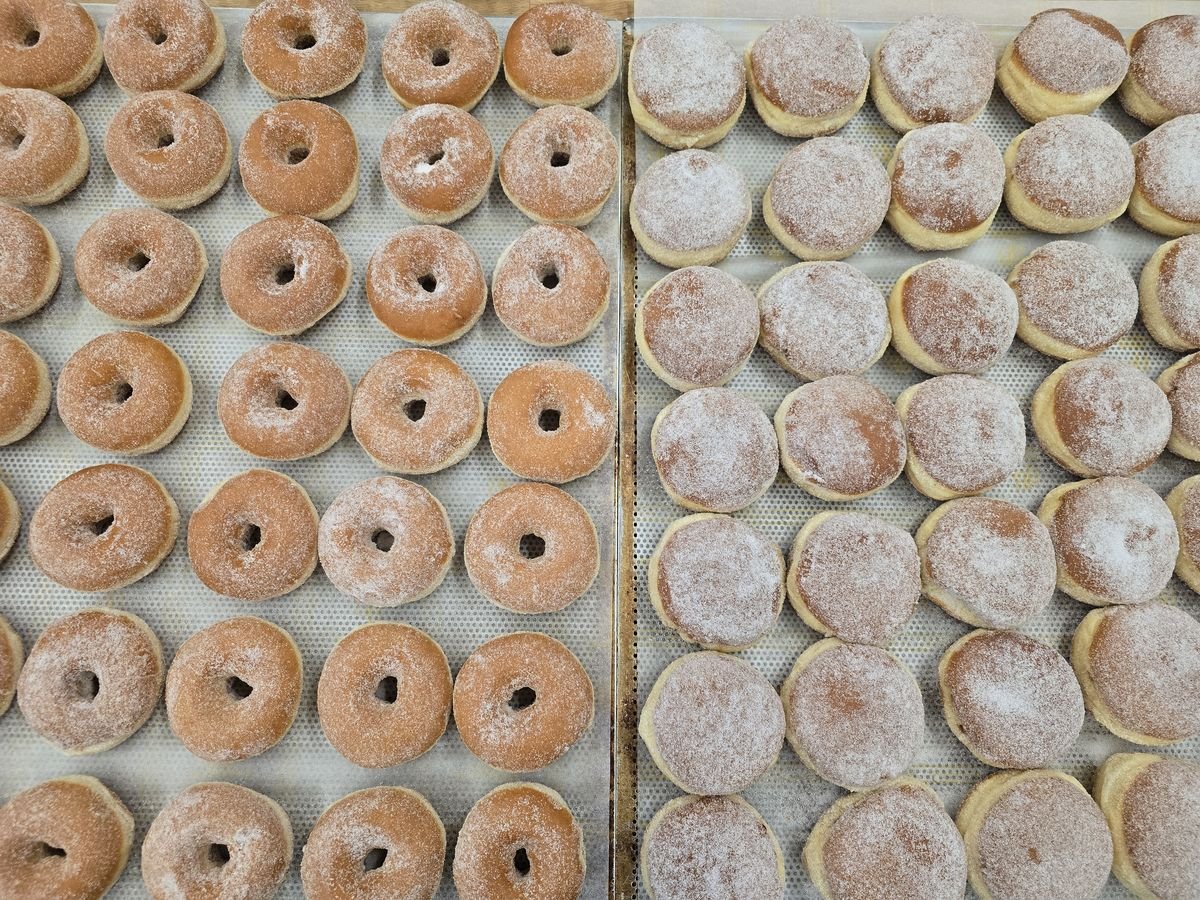
American donuts on the left, German Berliner on the right. Same fryer, two recipes, two pastry traditions on one tray.
Customers near US Army bases in Germany have told me the same story more than once. When the soldiers go on home leave, they pack boxes of Berliner into their luggage. A care package for the family back home. Big German Berliner, generously filled with jam, worth carrying across the Atlantic.
I love that. The country that exported the donut to the world – and its own soldiers fly home with German Berliner in their bags.
That story stays with me, and I think about it more often than I would have expected. We have InnovaBack machines running in twelve countries now: Germany, Austria, Switzerland, Hungary, Romania, Croatia, Spain, France, Poland, Greece, Suriname and Canada. Each installation taught us something. Some of it small, some of it the kind of thing you can only learn by standing in another country's bakery for two days.
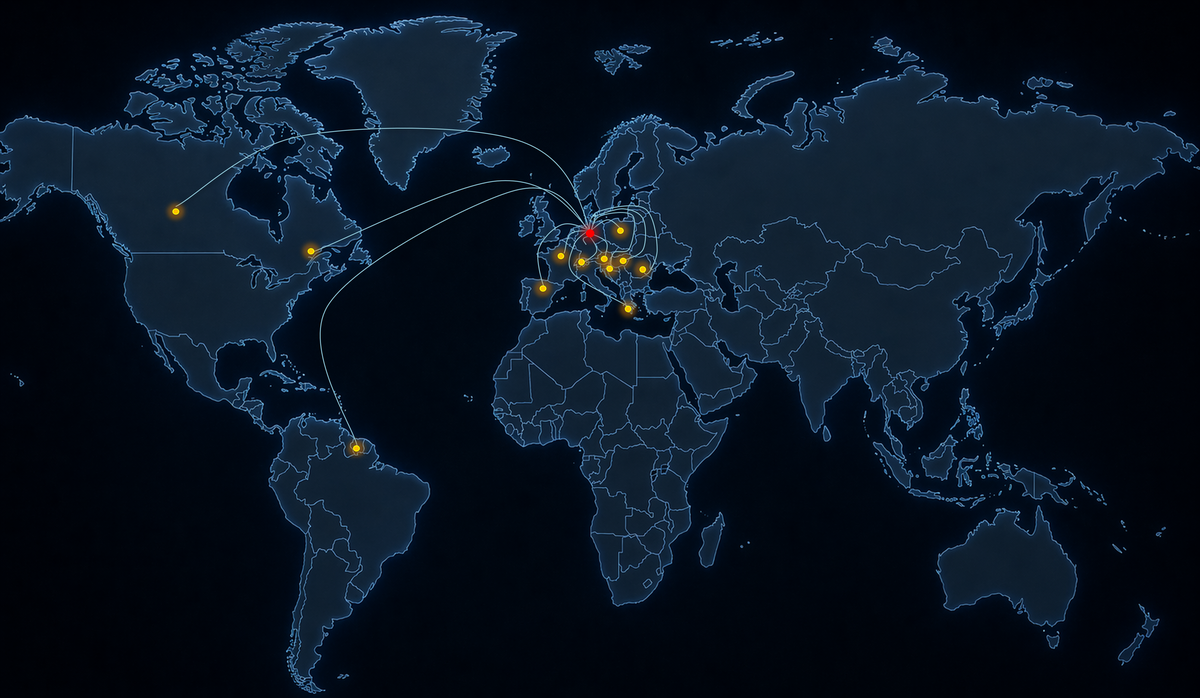
Twelve countries, all monitored online. Each dot marks a country – several run more than one fryer.
The first thing twelve countries taught us is that there is no single recipe for frying.
Frying times alone span from 90 seconds to almost eight minutes. A donut on a North American line can be out of the oil in 90 seconds. Some of our German bakers fry their Berliner in just under six minutes, others closer to eight – same name, different recipe, different bakery. The spread is wider than I would have guessed before we started shipping abroad.
The machine itself stays the same. What changes is the recipe: transport speed, heating zone setpoints, and above all the turning logic. The faster the cycle, the less individual each turn can be – 90 seconds does not leave time for the kind of careful handling that six minutes allows.
The second thing is that the same pastry is not the same pastry everywhere. Take the turning. In Germany, a Berliner is turned three times in the oil. That is the standard nobody questions, and the bright ring around the middle is part of how a Berliner is supposed to look. In other countries, a similar pastry is turned only once. The dough behind it is rarely identical – every region has its own version – but the turning alone is enough to change what the customer sees on the tray.
That is where the digital approach pays off. We can program the turning station for each product. A line that produces three-times-turned Berliner in the morning and runs Mini-Loukoumas after lunch runs from a different recipe – the operator loads it at the touch panel. That kind of flexibility is something twelve countries quietly asked us to build.
The third thing we learned is that distance worries more customers than it should. We support our installations digitally. Sensor data flows into a secure cloud, we see what is happening online, and the rest is usually a phone call with the operator. When a part actually needs to change, we ship the spare on 24-hour service – we use standard components, so the customer's own electrician or mechanic can fit it on site. If the customer wants us there in person, we come. In practice, that is almost never necessary. Suriname is further from Uelzen than Texas is. It still works.
So when an operator in Romania calls about a turning sequence, or a baker in Suriname wants to dial in a new recipe, the system does what it was built for. The conversation does the rest.
A short word on the Berliner.
I have stood next to fryers in Greece, Hungary, Croatia, Romania, France and Spain. I have eaten Loukoumas at the Greek coast. I have watched donuts come off a line in North America. In Spain I had anise-flavoured mini-donuts. They took some getting used to – and then they were really, REALLY good. There is not much fried sweet pastry in our markets I have not tasted. Each one has something going for it.
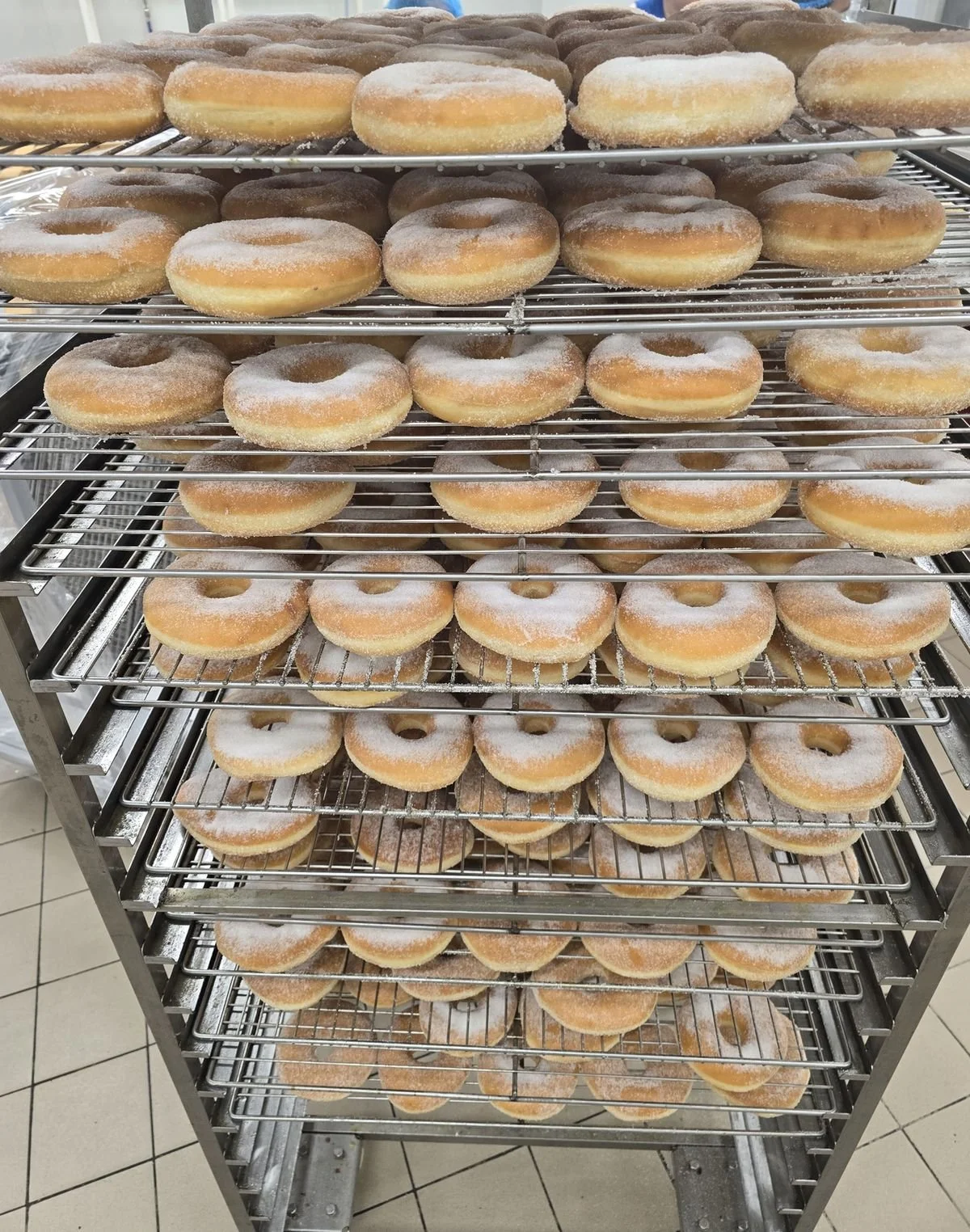
After a morning's run in Greece. Loukoumas, fresh from the fryer, on the way to the shop.
And still, when I am asked what my favourite is, the answer does not change. A proper German Berliner, generously filled with jam, eaten warm. Soft on the outside, that bright ring around the middle, the moment when the jam reaches your tongue.
I think the donut conquered the world because it is easy to eat – in the car, on the way to work, with one hand. The Berliner asks more of you. Real fruit jam, sitting inside the pastry, makes it harder to handle – and that is exactly where its kick comes from. The Berliner is massively underestimated.
Maybe that is also why it never went truly global. The donut fits a life on the run, the Berliner asks for a moment.
But customers across twelve countries, and US soldiers carrying boxes of Berliner home in their luggage, quietly disagree. The Berliner travels further than its reputation suggests. Personally, I think it deserves the trip.